
Introduction
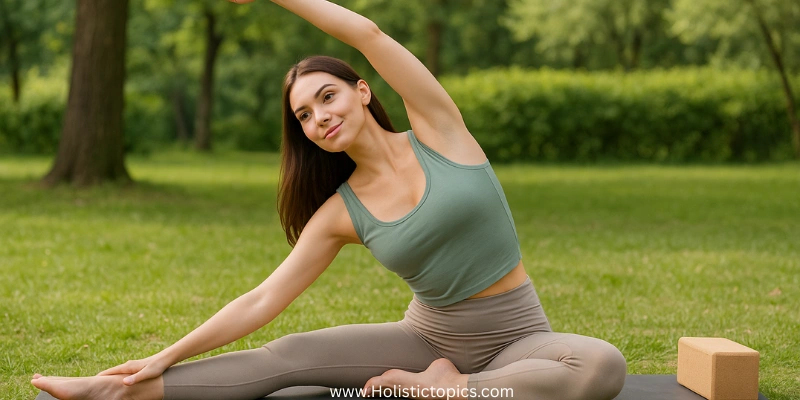
These yoga safety tips for beginners will help you practice with confidence and protect your body from strain or injury. Many beginners think yoga is only about stretching or copying poses they see online. But yoga is more than shapes. It is about awareness, balance, and safe movement.
When you learn how to practice yoga safely, each pose becomes gentle, steady, and meaningful. This guide shares simple yoga safety secrets for beginners that can help you build a strong and safe yoga practice for life.
Why Yoga Safety Matters
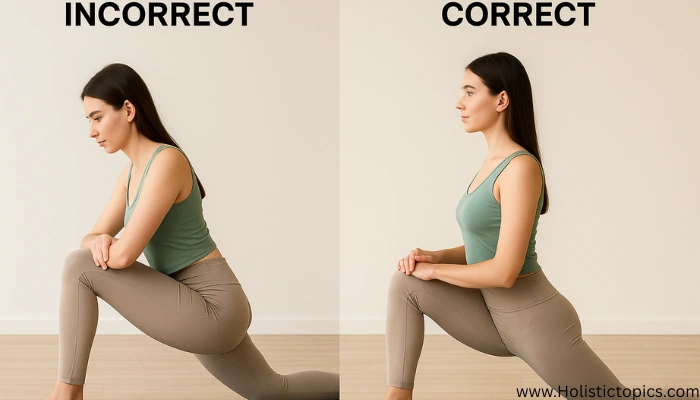
Yoga supports your mind and body. It builds strength, improves posture, and reduces stress. But beginners often make small mistakes that lead to discomfort. Some common yoga mistakes to avoid include pushing too hard, rounding the spine, locking joints, or rushing through poses.
Everybody is different, so your practice should match your limits. By learning yoga injury prevention tips, you stay safe, reduce pain, and enjoy your practice more.
The Most Important Yoga Safety Secrets for Beginners
Before you begin any pose, it is important to understand a few simple safety secrets that will guide your practice and help you stay strong, steady, and injury-free.
Secret 1: Proper Alignment and Body Awareness
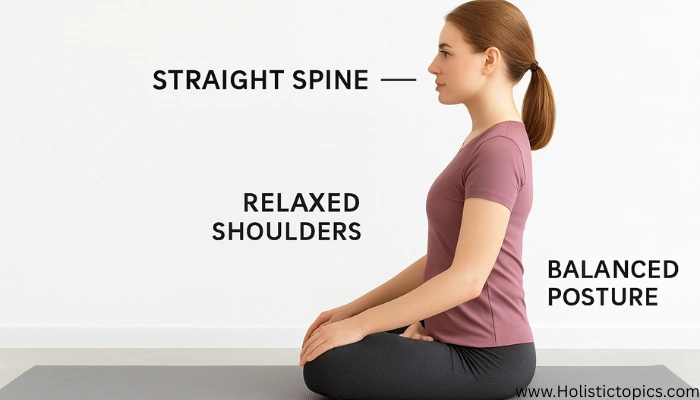
Good alignment keeps your joints safe and helps your muscles work the right way. It is the foundation of safe yoga practice for beginners.
Yoga Alignment Tips for Beginners
- Move slowly and stay aware of your body.
Slow movements help you notice how each pose feels. This prevents sudden strain and lets you adjust your position safely. - Keep your spine long and strong.
A long spine protects your lower back and keeps your chest open. It also helps you breathe with ease during each pose. - Relax your shoulders and avoid hunching.
Many beginners lift their shoulders without noticing. Relaxed shoulders reduce neck tension and keep your upper body steady. - Spread your weight evenly in standing poses.
When your weight is balanced, your knees and ankles stay safe. It also helps you hold the pose longer without wobbling. - Engage your core to protect your lower back.
A gently active core gives your spine support and prevents lower back pain in forward bends or standing poses. - Check your knees and wrists for comfort.
These areas take pressure in many poses. If they feel stressed, adjust your angle or use a prop for support.
Awareness matters as much as alignment. If you feel sharp pain, tingling, or pressure, pause and adjust. Yoga should feel calm, steady, and safe.
Secret 2: Smart Use of Props and Modifications
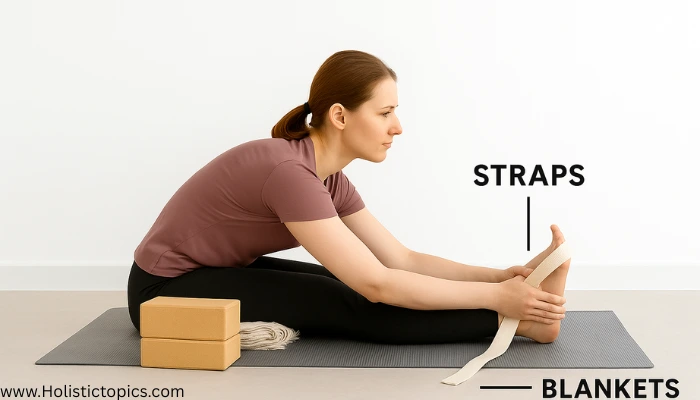
Props help you learn how to practice yoga safely, even if you have tight muscles or limited flexibility. They make each pose more comfortable and reduce the risk of injury.
How Props Help You Stay Safe
- Blocks help your hands reach the floor in standing poses.
When you cannot touch the ground, blocks lift the floor up to you. This keeps your spine long and your hips aligned. - Straps help you stretch without pulling too far.
A strap extends your reach, especially in seated forward bends or leg stretches. It prevents pulling or overstretching muscles. - Blankets cushion your knees and hips.
Soft support under joints makes poses more gentle. Blankets also help beginners sit taller in seated poses. - A wall or chair helps with balance and control.
Using a wall keeps you steady in balancing poses. A chair helps with gentle backbends or seated stretches if standing feels difficult.
Using props is a sign of wisdom, not weakness. They support a safe yoga practice for beginners and help you focus on your breath and posture.
Secret 3: Respecting Your Limits and Progression
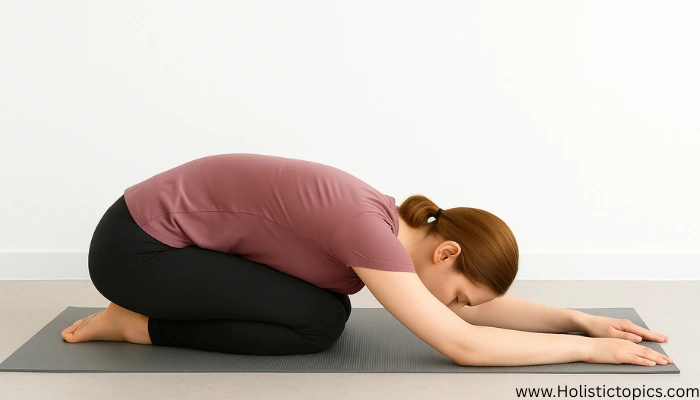
Yoga is not about forcing your body into deep poses. It is about moving with care. Respecting your limits helps you avoid pain and grow at a healthy pace.
How to Listen to Your Body
- Start with a simple body scan.
Notice where you feel tight, tired, or stiff. This helps you choose the right poses for the day. - Warm up before deep stretches.
Gentle warm-ups increase blood flow and help muscles relax. This prevents sudden pulling or strain. - Rest when you feel tired or out of breath.
Yoga should feel calm, not stressful. Taking breaks helps your body recover and keeps your mind relaxed. - Never push through sharp or sudden pain.
Pain is a warning sign. Stopping early keeps your joints and muscles safe from injury.
Progress comes from steady practice. When you honor your limits, your strength and flexibility grow naturally.
Secret 4: Choosing the Right Teacher and Environment
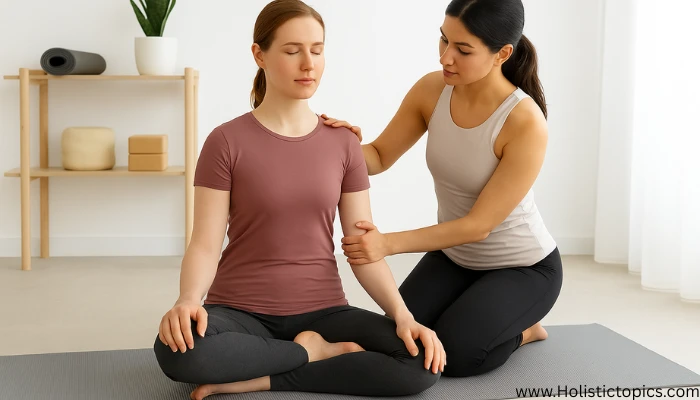
A good teacher guides you with clear cues and gentle corrections. The right environment also helps you stay safe and focused.
How to Choose a Good Teacher
- Look for trained and experienced instructors.
Certified teachers understand alignment, safety, and beginner needs. - Choose teachers who support beginners.
They offer modifications and explain poses step by step. - Avoid teachers who push you into painful poses.
A safe teacher respects your limits and encourages slow progress.
Create a Safe Space at Home
- Keep your area clean and clear.
A clutter-free space prevents slipping or tripping during practice. - Use a nonslip mat.
A good mat keeps your hands and feet steady, especially in standing poses. - Make sure the room has good light and air.
A bright and fresh room helps you stay alert and relaxed. - Follow trusted videos with safe instructions.
Choose videos that explain alignment, breathing, and step-by-step movement.
A calm space supports your mind and body and helps you practice with ease.
Secret 5: Emergency Awareness and Recovery Skills
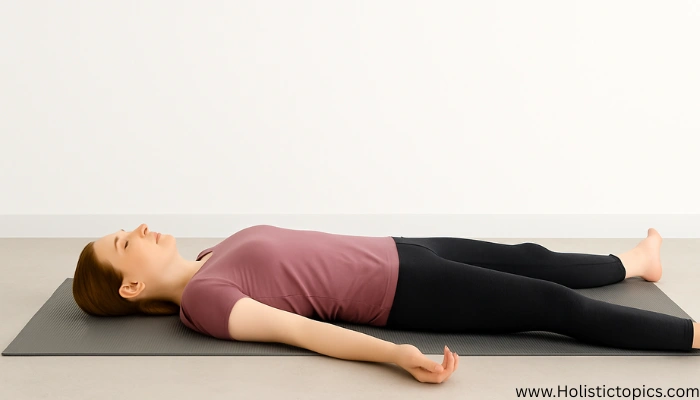
Even with caution, discomfort can occur. Knowing simple recovery steps keeps you safe and helps you avoid injury.
Simple Yoga Injury Prevention Tips
- Come out of poses slowly.
Quick movements can pull muscles or strain your joints. Slow exits keep your body steady. - Drink water to stay hydrated.
Hydration supports muscle function and prevents cramps. - Move into gentle poses like Child’s Pose when you feel pain.
Resting poses relax your muscles and calm your breath. - End every session with a cool-down.
Cooling down helps your heart rate settle and prevents soreness. - Use slow breathing to relax your mind and body.
Deep breaths support recovery and reduce tension after strong poses.
Recovery is part of a safe yoga practice for beginners. It helps your body heal and prepares you for your next session.
How to Make Yoga Safety a Habit
Safe yoga becomes easy when you follow simple habits each day.
Daily Safety Habits
- Start with a body scan.
It helps you understand how your body feels and what poses are right for you today. - Use props even on days you feel strong.
Props prevent strain and help you build better posture and alignment. - Move slowly and mindfully.
Slow movement reduces mistakes and helps your breath stay steady. - Keep your mat and space ready.
A clean space makes you feel calm and focused during yoga. - Write down how your body feels after practice.
This helps you track progress and notice patterns of strain or comfort.
These habits create a safe and enjoyable yoga routine that supports your long-term health. Proper alignment and safety help you get the most benefit out of your yoga practice — including stress relief. Start with our beginner yoga for stress relief guide.
Conclusion
Yoga can bring peace, strength, and balance into your life. By following these yoga safety tips for beginners, you protect your body, avoid strain, and grow with confidence. Alignment, props, rest, awareness, and good guidance help you build a safe yoga practice for beginners. When you follow these yoga safety secrets for beginners with patience, your practice becomes calm, strong, and safe for many years ahead.
FAQs
Q1. Can yoga cause injuries for beginners?
Yes. Injuries can happen if you ignore alignment or push too hard. Safe and slow practice helps prevent most issues.
Q2. What props should beginners use?
Beginners can use blocks, straps, and blankets. These props improve alignment and make poses more comfortable.
Q3. How often should I practice yoga safely?
Three to four times a week is enough. Regular, mindful practice is safer than long or forced sessions.
Q4. What should I do if I feel pain during yoga?
Stop right away, rest, and adjust your pose. Continue only when your body feels comfortable again.
Q5. How can I ensure safe progress in yoga?
Use props, follow clear instructions, set small goals, and listen to your body. Slow progress keeps you safe.
Sources
- National Center for Complementary and Integrative Health. Yoga: Effectiveness and Safety. nccih.nih.gov
- Harvard Health Publishing. Yoga Benefits Beyond the Mat. health.harvard.edu
- Verywell Fit. Common Yoga Injuries and How to Prevent Them. verywellfit.com
- Mayo Clinic. Yoga: What You Need to Know. mayoclinic.org
- Yoga Journal. How to Practice Yoga Safely. yogajournal.com
