
Introduction
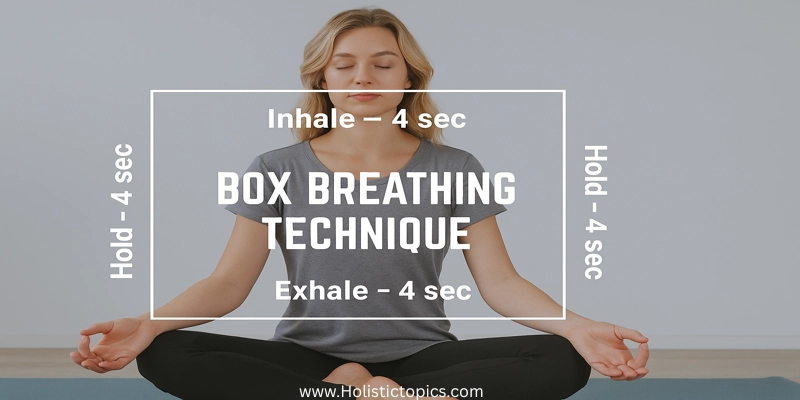
The box breathing technique is a simple and effective method that helps you calm your mind and control your stress levels. It uses slow and steady breaths to create a sense of balance in your body and mind. Many people use this technique because it brings instant relaxation, improves focus, and helps maintain emotional stability even during complicated or challenging situations.
Box breathing works by guiding your breathing into a smooth pattern. This rhythm helps your brain feel safe, which lowers stress and gives you a clear and calm mental state. Anyone can do it. You only need a quiet moment and a few minutes of steady breathing.
This guide will help you understand everything about the box breathing technique so you can use it with full confidence in your daily life.
What is the box breathing technique?
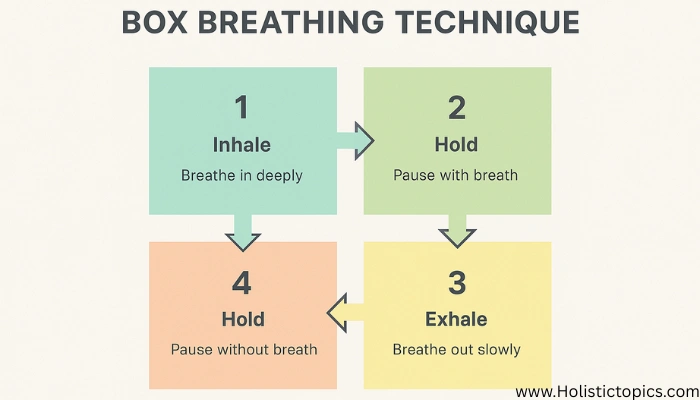
The box breathing technique is a four-step breathing method where each step lasts for the same amount of time. Imagine your breath moving in four equal steps, just like tracing the sides of a square. Each side of the square represents a phase of breathing.
The four steps include
- Inhale
- Hold
- Exhale
- Hold
Each one typically lasts for a count of four. This creates a balanced breathing rhythm that calms your nervous system and makes you feel grounded.
Box breathing is also known as square breathing or four-by-four breathing. It is used by athletes, therapists, students, office workers, and even military professionals to stay calm under pressure.
How Box Breathing Works in the Body
To understand why box breathing is so effective, it helps to know what happens inside your body.
When you breathe slowly and steadily, your brain activates the parasympathetic nervous system, which is responsible for rest and relaxation. This system lowers your heart rate, reduces tension in your muscles, and helps your mind slow down.
Two major benefits occur during this process:
1. Stress Hormones Decrease
Slow breathing helps reduce cortisol, which is the main stress hormone.
A report from Harvard Health shows that controlled breathing reduces stress and supports emotional stability.
2. Oxygen Flow Increases
Slow and deep breaths increase oxygen flow to your brain. This helps improve your thinking, focus, and mental clarity.
The Cleveland Clinic also explains that box breathing helps regulate your breathing, which supports calmness and improves overall mental well-being.
These scientific explanations show why box breathing works so quickly and why it is trusted by experts.
Step-by-Step Guide for Beginners
Here is the expanded, easy-to-follow guide to help you practice the box breathing technique with full confidence.
Step 1: Sit Comfortably
Sit upright in a comfortable position. Your shoulders should feel relaxed, and your back should be straight. You can sit on a chair, on the floor, or even lie down if that feels better.
A comfortable posture is important because it allows your lungs to expand fully.
Step 2: Inhale for 4 Seconds
Take a deep breath in through your nose. Inhale slowly and allow your lungs to fill with air. Do not rush this step. Imagine pulling in fresh energy and calmness.
Step 3: Hold for 4 Seconds
Gently hold your breath. This pause helps your body absorb the oxygen fully. Do not tighten your chest or force the breath. Keep it natural and steady.
Step 4: Exhale for 4 Seconds
Breathe out slowly through your mouth. This helps release tension and stress from your body. The exhale should be gentle and controlled.
Step 5: Hold Again for 4 Seconds
Hold your breath again after exhaling. This completes one full box breathing cycle and prepares your body for the next inhale.
Repeat this process for 2 to 5 minutes. As you get comfortable, you can increase the count from four to five or even six seconds.
This simple breathing pattern creates a steady rhythm that gives your mind a sense of safety and balance.
Benefits of the Box Breathing Technique

Here is a more detailed explanation of the major benefits of practicing box breathing regularly.
1. Reduces Stress Quickly
Box breathing activates your relaxation system and lowers stress hormones. This helps your body calm down immediately. Many people use it during overwhelming moments because it works fast and requires no special tools.
2. Improves Focus and Concentration
When your breathing becomes smooth, your thoughts also become clearer. This makes it easier to concentrate on tasks such as work, study, or creative activities. Box breathing brings your mind back to the present moment and reduces distractions.
3. Supports Better Sleep
This technique slows down your heart rate and relaxes your muscles. It also clears mental clutter, which often prevents sleep. Practicing box breathing before bedtime helps your mind settle and supports deeper sleep.
4. Helps During High-Pressure Situations
Whether you are preparing for an interview, giving a presentation, or dealing with emotional stress, box breathing helps you stay calm and centered. It gives you a moment to reset your thoughts and approach challenges with confidence.
5. Encourages Emotional Balance
Slow breathing helps regulate emotional reactions. This means you can stay calm even when you feel frustrated, angry, or anxious. Box breathing gives you control over your emotional responses.
6. Simple for Anyone to Learn
There is no equipment, no complicated steps, and no long learning curve. Even children and older adults can use this technique easily.
7. Helps Reduce Physical Tension
Many people hold tension in their shoulders, chest, and neck without noticing. Box breathing loosens these tight areas and helps your body relax naturally.
When and Where to Use Box Breathing
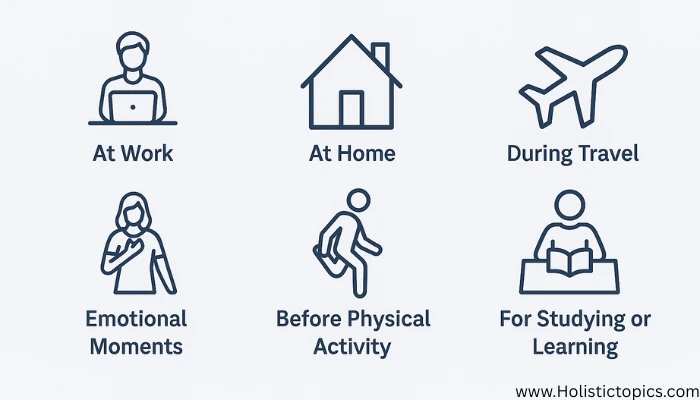
One of the best things about the box breathing technique is that you can practice it anytime and anywhere. Here are practical examples to help you use it in real life.
At Work
Use it before meetings, while sitting at your desk, or when you feel overwhelmed with tasks.
At Home
Practice it during your morning routine, while cooking, before meditating, or before going to sleep.
During Travel
Use it while traveling on a bus, plane, or train, or even sitting in traffic. It helps reduce travel anxiety and discomfort.
During Emotional Moments
When you feel anxious, angry, sad, or confused, box breathing helps you reset your emotions and think clearly again.
Before Physical Activity
Athletes use box breathing to prepare their minds and bodies before exercise or competitive events.
For Studying or Learning
This technique helps students refresh their minds and improve retention.
Box Breathing for Stress, Anxiety, Sleep, and Focus
For Stress Relief
Box breathing lowers cortisol and signals your body that it is safe. This simple method can ease mental pressure even in difficult situations.
For Anxiety
Racing thoughts and fast breathing often make anxiety feel worse. Box breathing slows everything down and helps you regain control.
For Better Sleep
Slow breathing calms your nervous system. Doing this technique for 5 to 10 minutes before bed helps you fall asleep more quickly.
For Focus and Mental Clarity
Deep breathing increases oxygen in your brain, which sharpens your attention and supports problem-solving.
Common Mistakes and How to Fix Them
Even though the box breathing technique is simple, many beginners unknowingly make mistakes that reduce the effectiveness of the breathing pattern. Understanding these mistakes and knowing how to fix them will help you get the full benefits of this calming method.
1. Breathing Too Fast
Many beginners rush through the counts, especially when they feel stressed. Fast breathing prevents your mind and body from entering a calm state.
How to Fix It:
Slow down your counting. Use a gentle rhythm like counting one, two, three, four in your mind. Imagine moving around the edges of a square with each count.
2. Forcing the Breath
Some people inhale or exhale with too much effort. This creates tension in the chest, neck, and shoulders.
How to Fix It:
Keep the breath soft. Allow the air to flow naturally without pushing. Relax your shoulders and chest so your breath feels smooth and effortless.
3. Holding the Breath Too Tightly
The hold phases should feel comfortable. Holding too tightly can make you feel breathless or tense.
How to Fix It:
Think of the hold as a gentle pause instead of locking your breath. Keep your body relaxed during the hold.
4. Losing Posture
Slouching restricts airflow and makes breathing less effective.
How to Fix It:
Sit upright with your spine straight and shoulders relaxed. Good posture helps your lungs expand fully and improves the rhythm of your breathing.
5. Getting Distracted Easily
Thoughts often wander, causing people to lose count or break the breathing pattern.
How to Fix It:
Use visualization. Picture a glowing square and mentally trace each side as you breathe. This keeps your focus steady and supports a calm breathing rhythm.
Expert Tips to Improve Your Breathing Results
1. Practice at the Same Time Every Day
Consistency trains your brain to relax more quickly. Daily practice helps you enter a calm state faster over time.
Why It Helps:
Your nervous system begins to recognize the routine and responds with relaxation more easily.
2. Use Visualization Techniques
Imagining a moving square or a soft light helps guide your breathing and reduces distractions.
Why It Helps:
Visualization strengthens focus and supports a smoother breathing rhythm.
3. Start with Shorter Counts
If four seconds feels too long, begin with three-second intervals and slowly increase as you become comfortable.
Why It Helps:
It prevents strain and allows your body to adjust naturally.
4. Pair Breathing with Gentle Stretching
Light shoulder or upper back stretches before breathing open up your chest and improve airflow.
Why It Helps:
Relaxed muscles make breathing more effective and comfortable.
5. Use Box Breathing During Stressful Moments
Practice the technique when you feel overwhelmed, anxious, or mentally tired.
Why It Helps:
It lowers your heart rate, clears your mind, and helps you respond calmly instead of reacting emotionally.
Conclusion
The box breathing technique is a simple yet powerful tool that helps you relax your mind and improve your overall well-being. It works quickly, supports emotional balance, and helps you stay centered even during stressful moments. With daily practice, you will notice better sleep, improved focus, and a calmer mindset. Anyone can use this breathing technique to create a more peaceful and productive lifestyle.
Frequently Asked Questions
1. How long should I practice box breathing?
Start with 2 to 5 minutes. As you get comfortable, increase it to 10 minutes for deeper relaxation.
2. Can box breathing help with anxiety?
Yes. It slows your breathing and helps calm racing thoughts, which makes anxiety more manageable.
3. Is box breathing safe for beginners?
Yes. It is simple, gentle, and safe for all age groups.
4. Can box breathing help with sleep?
Absolutely. It relaxes your mind and prepares your body for restful sleep.
5. How often should I use box breathing?
You can use it multiple times a day whenever you need calm and focus.
