
Introduction
Pranayama techniques are simple breathing practices that help calm the mind, strengthen the body, and improve overall well-being. In yoga, the breath is more than air. It is a powerful tool that connects the body and the mind. When breathing becomes slow and mindful, stress reduces, and mental clarity improves.
Modern research now supports what ancient yogic practices have taught for centuries. Controlled breathing can lower stress levels, improve focus, support lung health, and balance the nervous system. The best part is that pranayama techniques are easy to learn and can be practiced by beginners without any special equipment. With just a few minutes of daily practice, breathing can become a natural way to restore calm and energy.
The best news is this. You do not need experience or expensive equipment. You only need your breath. This guide focuses on pranayama techniques for beginners that improve both mental clarity and physical health.
What is Pranayama
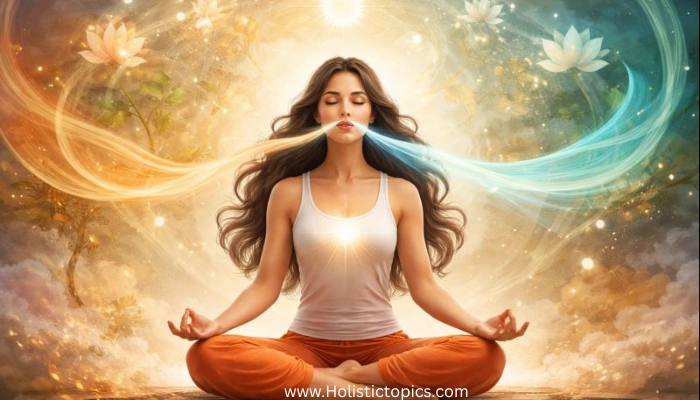
Pranayama comes from two Sanskrit words. “Prana” means life energy. Yama means control. So pranayama means controlling the flow of life energy through breathing.
In simple words, pranayama is conscious breathing.
We breathe around twenty thousand times every day without thinking. But when we control our breath with intention, amazing things happen. Breath is the bridge between the body and the mind.
Pranayama:
- Lowers stress by calming the nervous system
- Improves lung function and oxygen flow
- Increases focus and mental clarity
When oxygen is high and stress is low, your mind becomes powerful and your body becomes stronger.
The Science Behind Pranayama
Each breath you take sends signals to your nervous system.
When breathing is slow
- Heart rate reduces
- Blood pressure drops
- The brain becomes calm
When breathing is fast
- Stress hormones increase
- Anxiety rises
- Focus becomes weak
Pranayama activates the parasympathetic nervous system. This system is responsible for calmness and deep rest. It also stimulates the vagus nerve, which controls stress response.
With pranayama, you are training your body and brain to relax on command.
Powerful Pranayama Benefits for the Mind
Pranayama transforms your mental and emotional health.
Mental benefits include
- Less anxiety and stress
- Improved concentration
- Better emotional balance
- Increased patience
- Sharper decision-making
When breath slows down, thoughts slow down.
That is when real clarity appears.
Many people try to meditate but fail because their mind keeps jumping around. Pranayama prepares the mind for meditation. Once the breath is calm, meditation becomes natural.
Incredible Pranayama Benefits for the Body
Breathing is the only automatic body function you can control. When you control the breath, you control how your body feels.
Physical benefits include
- Increased lung capacity
- Improved blood circulation
- Higher immune strength
- Better digestive health
- Improved sleep quality
- Higher oxygen levels in the body
Every cell uses oxygen to work.
More oxygen means more energy and faster healing.
Pranayama also improves posture and opens the chest area. This helps remove stiffness from the neck, shoulders, and upper back.
Best Pranayama Techniques for Beginners
These breathing techniques are safe, simple, and perfect for beginners.
Practice any of them for ten to fifteen minutes daily. Always sit with a straight spine. If possible, practice early morning when the mind is fresh.
Box Breathing for Instant Calm
This technique is used by Navy soldiers to stay calm under pressure.
Steps
- Inhale through the nose for four seconds
- Hold your breath for four seconds
- Exhale through the nose for four seconds
- Hold again for four seconds
- Repeat for five minutes
This helps reduce anxiety and overthinking quickly.
Nadi Shodhana for Focus and Balance
Nadi Shodhana means alternate nostril breathing.
This technique balances the left and right sides of the brain.
Steps
- Close the right nostril with your thumb
- Inhale through the left nostril
- Close the left nostril with your ring finger
- Exhale through the right nostril
- Inhale through the right
- Exhale through the left
This creates mental clarity and improves focus.
Bhramari for Deep Relaxation
Bhramari means bee breath. While exhaling, a soft humming sound is made, like a bee.
Steps
- Inhale deeply
- Exhale slowly while creating a humming sound
- Repeat for five to seven rounds
This vibration relaxes the nervous system and reduces anger.
Kapalbhati for Digestion and Energy
Kapalbhati means shining skull.
It boosts energy and detoxifies the body.
Steps
- Inhale naturally
- Exhale forcefully by pulling the stomach in
- Repeat continuously for thirty seconds
- Rest and repeat up to three sets
Do not practice if pregnant or if you have heart issues.
Ten-Minute Morning Routine
Follow this simple plan
| Time | Technique |
| 2 min | Box Breathing |
| 3 min | Nadi Shodhana |
| 3 min | Kapalbhati |
| 2 min | Bhramari |
You will feel fresh, energized, and focused for the entire day.
Common Mistakes to Avoid
Many beginners make these mistakes. Avoid them.
- Practicing right after eating
- Forced breathing
- Holding breath longer than comfortable
- Practicing when exhausted or unwell
Breathing should feel gentle, not stressful.
Your breath should guide you, not control you.
Safety Guidelines
- Practice on an empty stomach
- Sit with a straight spine
- If you feel dizzy, stop
- Avoid overdoing Kapalbhati
- Breathe through the nose instead of the mouth
If you have asthma, heart issues, or breathing disorders, consult your doctor before practicing.
Final Thoughts
Pranayama is more than a breathing practice. It is a simple yet powerful way to calm the mind, strengthen the body, and improve overall well-being. By practicing pranayama techniques regularly, beginners can reduce stress, improve focus, and build a deeper connection with their breath.
You do not need advanced skills or long practice hours to see results. Even a few minutes a day can create positive changes over time. Start with gentle pranayama techniques, listen to your body, and allow the benefits to grow naturally as breathing becomes a part of your daily routine.
FAQs
1. What is pranayama in simple words?
Pranayama means controlling the breath to calm the mind and increase energy.
2. How many minutes of pranayama should a beginner practice?
Ten to fifteen minutes a day is ideal for beginners.
3. Can pranayama reduce stress?
Yes. Slow breathing activates the nervous system that instantly relaxes stress.
4. Which pranayama is best for beginners?
Box breathing and Nadi Shodhana are the easiest for beginners.
5. Can pranayama help with sleep?
Yes. Bhramari breathing can help relax the mind and improve sleep quality.
Sources
Harvard Medical School
https://www.health.harvard.edu/mind-and-mood/yoga-for-anxiety-and-depression
National Center for Biotechnology Information https://www.ncbi.nlm.nih.gov/pmc/articles/PMC6145966
Journal of Ayurveda and Integrative Medicine
https://www.ncbi.nlm.nih.gov/pmc/articles/PMC3099099
